
Architecture
The Arches and Columns of the Mosque of Córdoba
How the double arches in red brick and white stone were built, where the columns came from and how to read the forest of arches phase by phase.
In short
The Arches and Columns of the Mosque of Córdoba: the answer
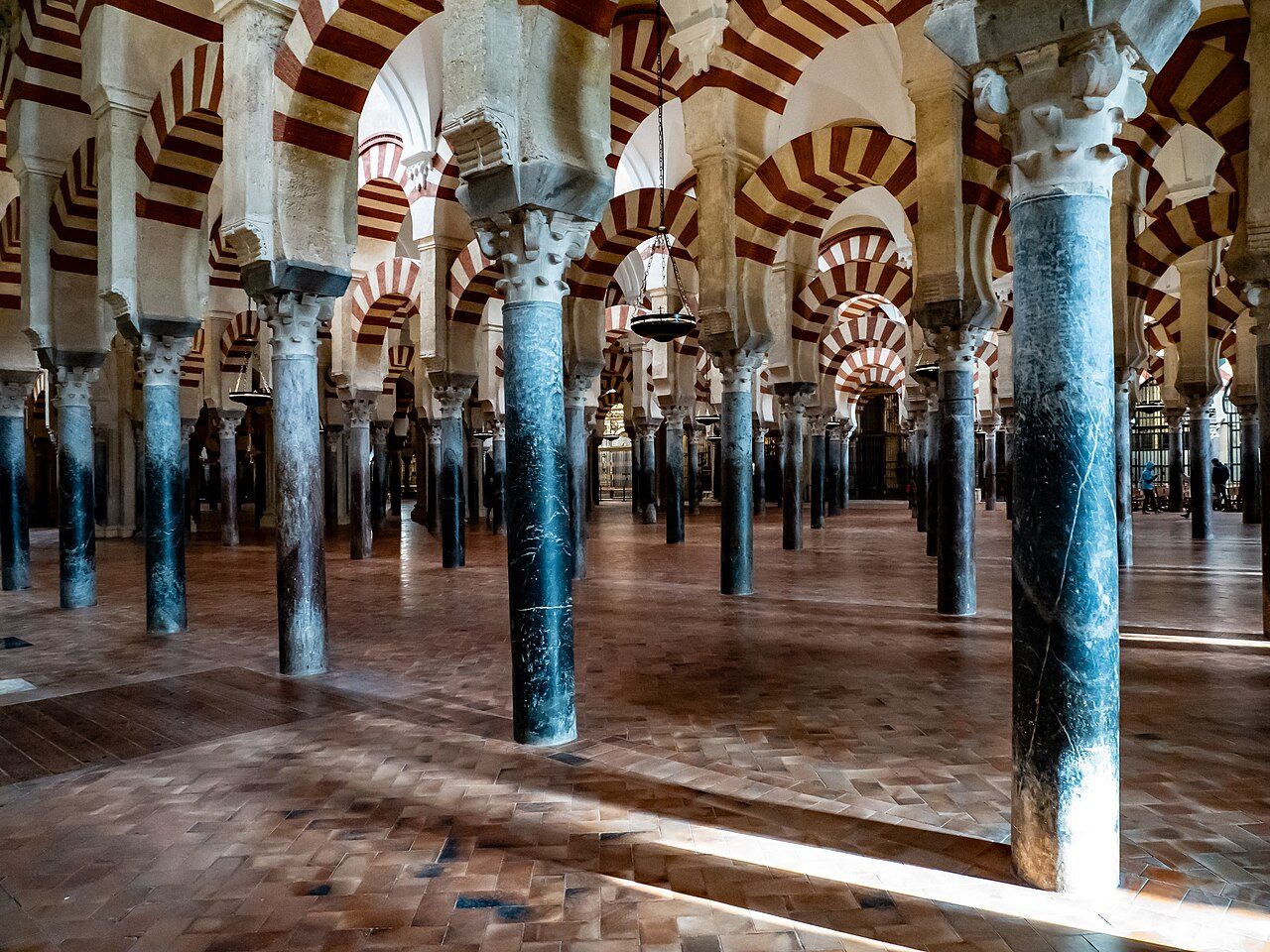
The arches of the Mosque of Córdoba are double: a horseshoe arch below and a semicircular arch above, resting on the same column. Their voussoirs alternate red brick and white limestone. This two-tier system raised the roof high enough using short reused columns, about 850 of which survive from an original total of more than 1,000, many taken from Roman and Visigothic buildings.
Last verified
Arch system
Horseshoe arch below, round arch above
Materials
Alternating red brick and white limestone
Columns today
About 850
Column origin
Many reused Roman and Visigothic shafts and capitals
First arches
785–786, Abd al-Rahman I
Prayer hall area
About 23,400 m²
Why the arches are double
When Abd al-Rahman I began the mosque in 785, the builders used columns salvaged from earlier Roman and Visigothic buildings in Córdoba. These shafts were too short to carry a high roof. The solution was to stack two rows of arches: a lower horseshoe arch that braces the columns, and an upper round arch that carries the roof on square pillars rising from the same capitals. The result is a hall that feels taller and lighter than its columns would allow.
The red and white voussoirs
The famous stripes come from alternating wedge-shaped voussoirs of red brick and white limestone. The combination is often compared with Roman aqueducts in Hispania, and it gave the arches both strength and a rhythm that repeats across the whole hall.
The columns: a museum of spolia
Look closely and no two columns are quite the same. Shafts of different marbles, granites and jaspers stand on bases of varying heights, topped by Roman Corinthian, Visigothic and later Umayyad capitals. The expansions of Abd al-Rahman II and al-Hakam II used more capitals carved for the mosque, which helps you date each part.
How the arches change with each phase
Abd al-Rahman I and II
Simple double arches with plain voussoirs and reused capitals.
Al-Hakam II
In front of the mihrab the arches become polylobed and interlaced, a showpiece of 10th-century Umayyad architecture.
Almanzor
The last expansion copies the old model but paints the red stripes on stone instead of using brick, a cheaper solution you can spot up close.
To see the differences in context, join our Mosque-Cathedral guided tour.
What to look for
How to date the arches
| Phase | What to look for |
|---|---|
| Abd al-Rahman I (785–786) | Reused columns of different heights, brick and stone voussoirs |
| Abd al-Rahman II (833–848) | More uniform shafts and capitals carved for the mosque |
| Al-Hakam II (961–976) | Polylobed, interlaced arches in front of the mihrab |
| Almanzor (987–988) | Red stripes painted on stone instead of brick |
Worth knowing before you go
Part of the original forest of columns was removed when the cathedral nave and the side chapels were built from the 13th to the 17th century, which is why the number of columns today is lower than in the 10th century.
FAQ
Frequently asked questions
Short answers to what visitors ask most about The Arches and Columns of the Mosque of Córdoba.
How many columns are there in the Mosque of Córdoba?
About 850 columns survive today, out of more than a thousand before the cathedral and chapels were built inside the mosque.
Why are the arches red and white?
The voussoirs alternate red brick and white limestone. In Almanzor's expansion the red stripes are painted on stone.
Where did the columns come from?
Many were reused from Roman and Visigothic buildings in and around Córdoba; later expansions added capitals carved specifically for the mosque.
Ready when you are
Twelve centuries. Ninety minutes.
See the Mosque of Córdoba with a licensed guide. Daily at 10:00, ten people at most, entry at face value.