
History
Mosque of Córdoba Timeline: From 785 to Today
Every key date of the Mosque-Cathedral in order: the Umayyad foundation, the four Islamic phases, the Christian cathedral and its UNESCO listing.
In short
Mosque of Córdoba Timeline: From 785 to Today: the answer
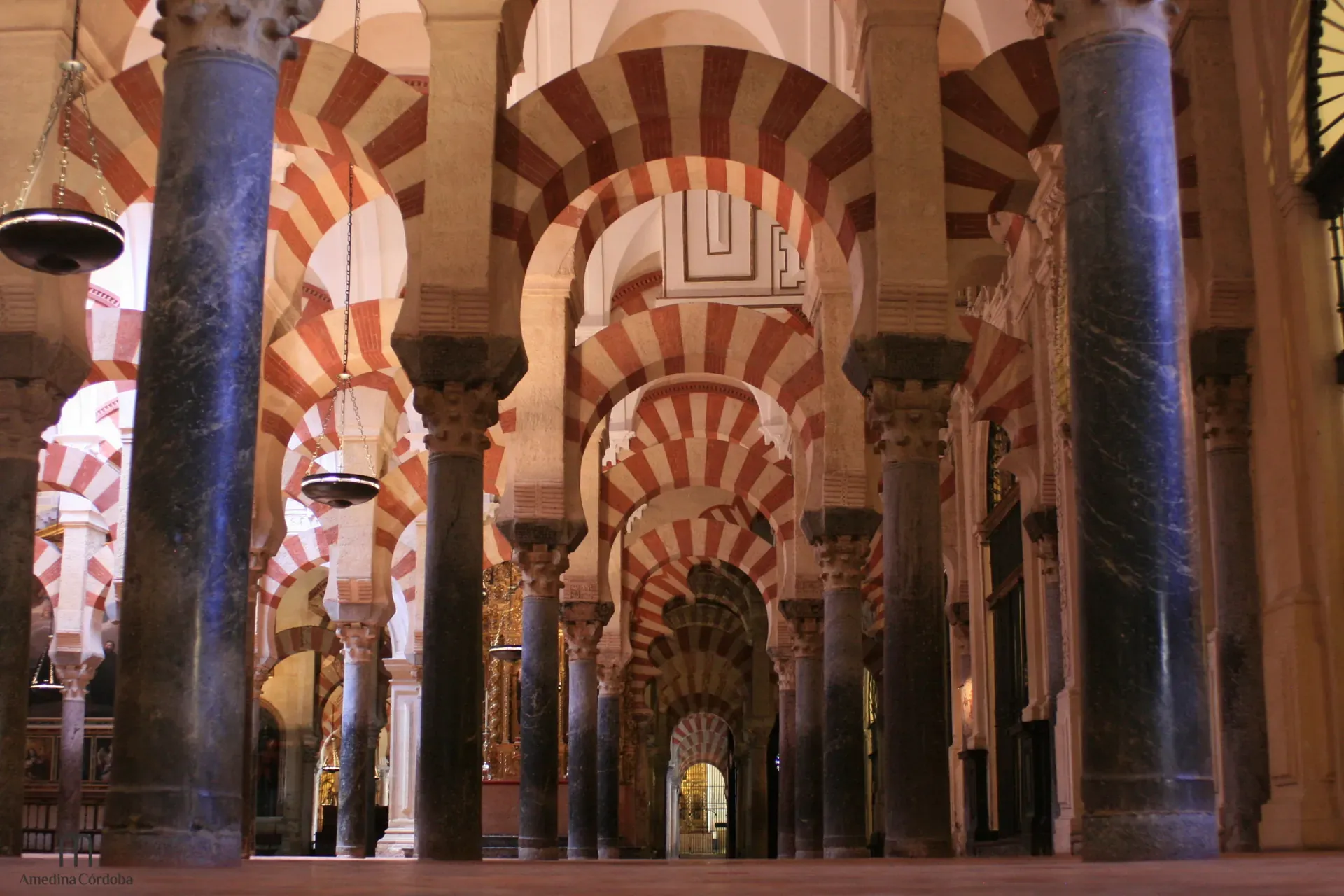
The Mosque of Córdoba was founded by the Umayyad emir Abd al-Rahman I in 785 and expanded three times: by Abd al-Rahman II (833–848), al-Hakam II (961–976) and Almanzor (987–988). After Ferdinand III took Córdoba in 1236 it became the city's cathedral. The cathedral nave was built inside it from 1523, and UNESCO listed it as World Heritage in 1984.
Last verified
Founded
785, Abd al-Rahman I
Islamic expansions
833–848, 961–976, 987–988
Becomes a cathedral
1236
Cathedral nave begun
1523
UNESCO World Heritage
1984 (extended to the historic centre in 1994)
Before the mosque
The site had been a place of worship before 785. Excavations have found the remains of a late Roman and Visigothic Christian complex, traditionally identified with the basilica of San Vicente, whose mosaics are visible under glass panels in the floor.
The Umayyad mosque (785–1236)
Abd al-Rahman I, the surviving prince of the Umayyad dynasty of Damascus, founded the mosque in 785. His successors expanded it as Córdoba became one of the largest cities in Europe: Abd al-Rahman II lengthened the prayer hall, Abd al-Rahman III built a new minaret and courtyard, al-Hakam II added the maqsura and the mihrab, and Almanzor widened the building to the east.
The Christian cathedral (1236 to today)
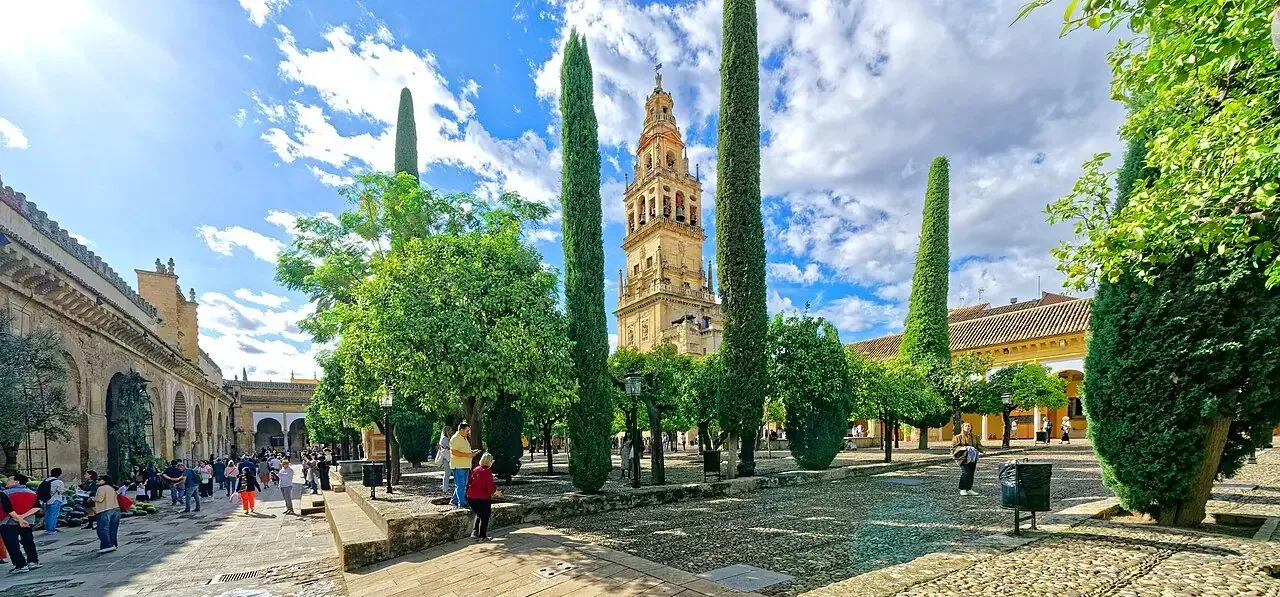
On 29 June 1236 Ferdinand III of Castile entered Córdoba and the mosque was consecrated as a cathedral. Chapels were added along the walls, the Royal Chapel in the 14th century, and from 1523 the large Renaissance nave in the centre. The minaret was encased in the bell tower from the late 16th century.
Recognition and conservation
The building was declared a national monument in 1882 and a UNESCO World Heritage Site in 1984. Ten years later the listing was extended to the historic centre of Córdoba. Today it receives around two million visitors a year.
Chronology
Key dates
| Year | Event |
|---|---|
| 785 | Abd al-Rahman I founds the mosque |
| 833–848 | Abd al-Rahman II lengthens the prayer hall |
| 951–952 | Abd al-Rahman III builds a new minaret and enlarges the courtyard |
| 961–976 | Al-Hakam II adds the maqsura and the mihrab |
| 987–988 | Almanzor's expansion to the east, the largest |
| 1236 | Ferdinand III conquers Córdoba; the mosque becomes a cathedral |
| 14th century | The Royal Chapel is built |
| 1523 | Works on the cathedral nave begin |
| Late 16th century | The minaret is encased in the Renaissance bell tower |
| 1882 | Declared a national monument |
| 1984 | UNESCO World Heritage Site |
| 1994 | Listing extended to the historic centre of Córdoba |
Worth knowing before you go
Some dates, especially for the earliest building on the site and for the exact start of each expansion, vary slightly between sources. We use the dates given by the Cathedral Chapter and standard academic references.
FAQ
Frequently asked questions
Short answers to what visitors ask most about Mosque of Córdoba Timeline: From 785 to Today.
When was the Mosque of Córdoba built?
It was founded in 785 by Abd al-Rahman I and expanded in three main phases until 988.
When did the mosque become a cathedral?
In 1236, after Ferdinand III of Castile conquered Córdoba.
When was the Mosque of Córdoba listed by UNESCO?
In 1984. In 1994 the listing was extended to the historic centre of Córdoba.
Ready when you are
Twelve centuries. Ninety minutes.
See the Mosque of Córdoba with a licensed guide. Daily at 10:00, ten people at most, entry at face value.