
Architecture
The Mihrab of the Mosque of Córdoba
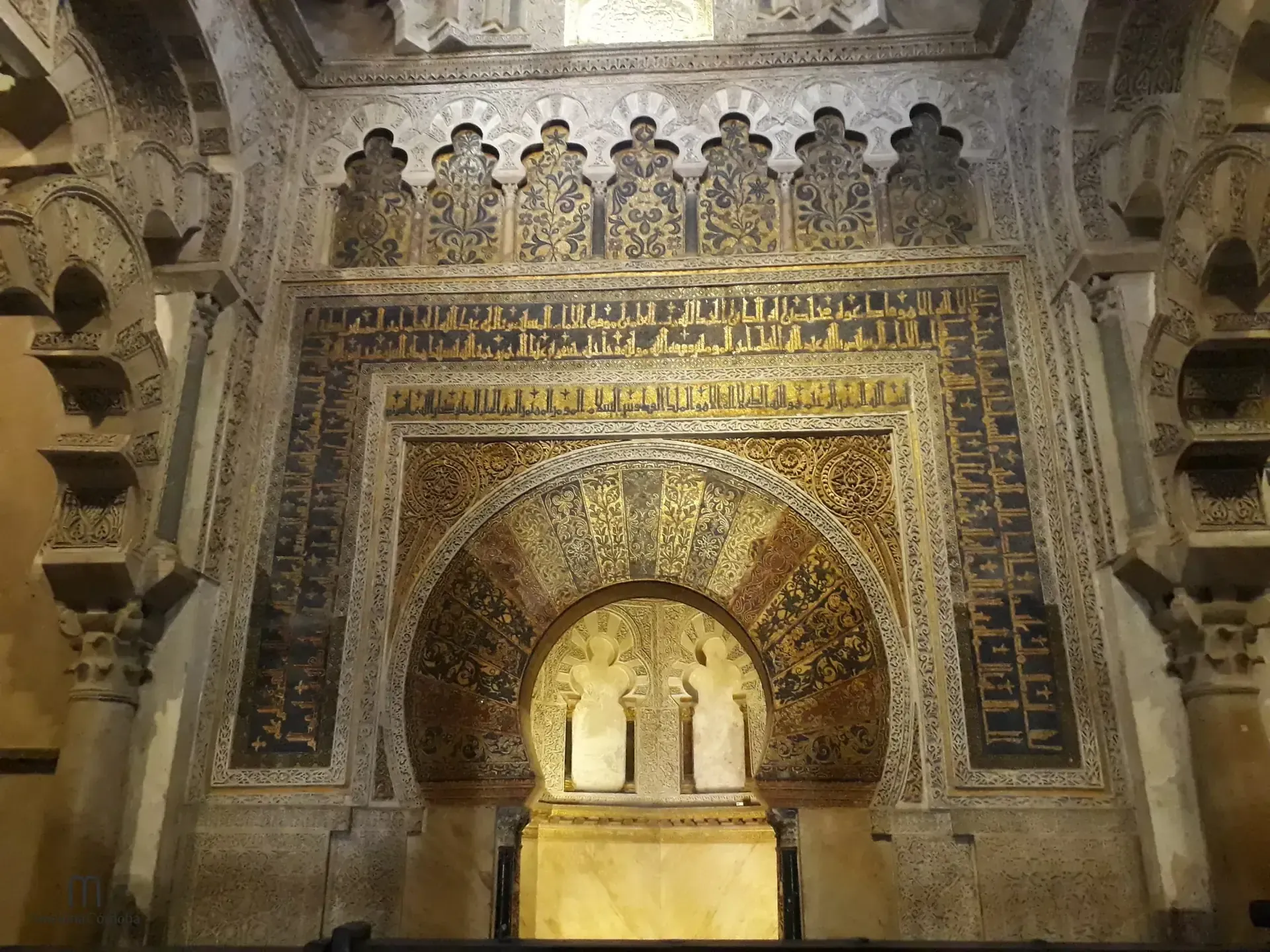
The 10th-century prayer niche of al-Hakam II: an octagonal chamber framed by gold mosaics made with help from Byzantium, and the domes of the maqsura in front of it.
In short
The Mihrab of the Mosque of Córdoba: the answer
The mihrab of the Mosque of Córdoba is the prayer niche built under Caliph al-Hakam II between 961 and 976. Unlike most mihrabs, it is a small octagonal room behind a horseshoe arch. Its façade is covered in gold and coloured glass mosaics made with a master mosaicist and materials sent by the Byzantine emperor, and it is the artistic high point of the whole monument.
Last verified
Built under
Caliph al-Hakam II
Date
961–976
Form
Octagonal chamber behind a horseshoe arch
Decoration
Gold and glass mosaics, carved marble, Kufic inscriptions
Mosaic workshop
Master and materials sent from Byzantium
Orientation
Faces south, not towards Mecca
What a mihrab is
In a mosque, the mihrab marks the qibla, the direction of prayer. In Córdoba it is not a simple niche but an octagonal room covered by a shell-shaped dome carved from a single block of marble. It sits in the qibla wall of al-Hakam II's expansion, the richest phase of the mosque.
The mosaics
The façade around the horseshoe arch is covered in mosaics of gold and coloured glass tesserae. According to the chronicles, al-Hakam II asked the Byzantine emperor for a master mosaicist, who came to Córdoba with materials and trained local craftsmen. The result combines Byzantine technique with Umayyad design: plant motifs, geometric frames and Quranic inscriptions in Kufic script.
The maqsura
In front of the mihrab is the maqsura, the enclosure reserved for the caliph. Three ribbed domes cover it, resting on interlaced polylobed arches. The central dome, with its crossing ribs and gold mosaics, is one of the most influential pieces of medieval architecture in the Mediterranean.
Why it faces south
The qibla wall of the Mosque of Córdoba faces roughly south, not south-east towards Mecca. Historians still debate why: the builders may have followed the orientation of the Great Mosque of Damascus, the homeland of the Umayyads, or the layout of the earlier buildings on the site.
The mihrab is a key stop on our Mosque-Cathedral guided tour.
What to look for
What to look for in the mihrab
| Detail | Where |
|---|---|
| Gold mosaics | On the arch frame and the band above it |
| Kufic inscriptions | In the bands around the arch |
| Shell-shaped dome | Inside the octagonal chamber |
| Ribbed domes | Above the maqsura in front of the mihrab |
| Polylobed arches | Framing the maqsura |
Worth knowing before you go
The mihrab is protected by a barrier and you see it from a few metres away. Photos are allowed, but flash adds little to the mosaics; a steady hand and a higher ISO work better.
FAQ
Frequently asked questions
Short answers to what visitors ask most about The Mihrab of the Mosque of Córdoba.
Who built the mihrab of the Mosque of Córdoba?
It was built under Caliph al-Hakam II, between 961 and 976, as part of his expansion of the mosque.
Why is the mihrab of Córdoba unique?
It is an octagonal room rather than a niche, with a single-block marble dome and Byzantine-made gold mosaics on its façade.
Does the mihrab face Mecca?
No. The qibla wall faces roughly south. The most common explanation is that it follows the orientation of mosques in Syria, the Umayyads' homeland.
Ready when you are
Twelve centuries. Ninety minutes.
See the Mosque of Córdoba with a licensed guide. Daily at 10:00, ten people at most, entry at face value.