
Architecture
The Courtyard of the Orange Trees (Patio de los Naranjos)
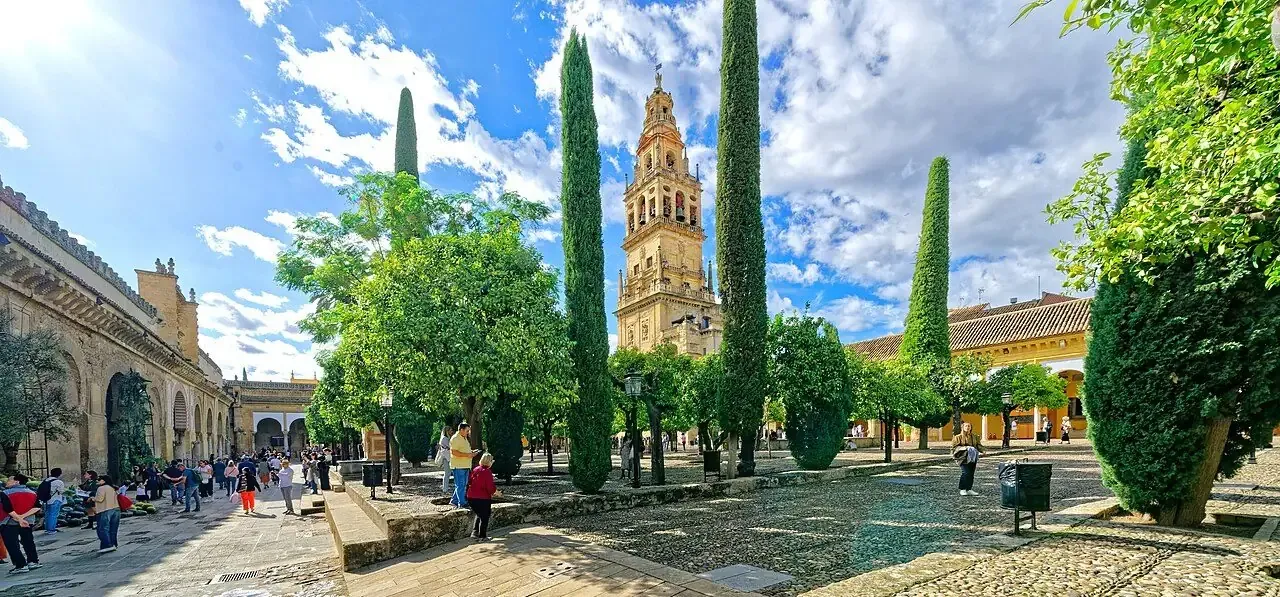
The former ablutions courtyard of the mosque: its orange trees, fountains, irrigation channels and the free access at the entrance of the Mezquita.
In short
The Courtyard of the Orange Trees (Patio de los Naranjos): the answer
The Patio de los Naranjos is the large courtyard on the north side of the Mosque-Cathedral of Córdoba. It was the sahn of the mosque, where worshippers performed ablutions before prayer, and was enlarged by Abd al-Rahman III in the 10th century. Its rows of orange trees date from after the Christian conquest, and entry to the courtyard itself is free during opening hours.
Last verified
Original function
Ablutions courtyard (sahn) of the mosque
Enlarged by
Abd al-Rahman III, 10th century
Trees
Orange trees, palms, olive and cypress
Irrigation
Traditional channels that still water the trees
Entry to the courtyard
Free during opening hours
Main door
Puerta del Perdón, under the bell tower
From ablutions court to cloister
Every great mosque had a courtyard where worshippers washed before prayer. In Córdoba the sahn grew with each expansion of the prayer hall, and Abd al-Rahman III enlarged it in the 10th century together with his new minaret. After 1236 the Cathedral Chapter turned it into a cloister-like garden, and the orange trees that give it its name were planted in rows aligned with the columns of the prayer hall.
Water in the courtyard
The fountains and the stone channels that run between the trees continue a system that has watered the courtyard for centuries. In the mosque, the arches facing the courtyard were open, so the rows of trees outside continued the rows of columns inside: a garden that extended the prayer hall.
What to see
- The Puerta del Perdón, the main gate under the bell tower.
- The fountains and irrigation channels between the orange trees.
- The north façade of the prayer hall, where the arches were later walled in.
- The bell tower, built around the 10th-century minaret.
Free access
You can walk into the Patio de los Naranjos without a ticket during opening hours. The ticket is needed for the prayer hall and the cathedral. Our guided tour starts at the Puerta del Perdón and begins its story here.
What to look for
In the courtyard
| Feature | Why it matters |
|---|---|
| Puerta del Perdón | Main gate and meeting point for tours |
| Orange trees | Rows aligned with the columns inside |
| Fountains | Successors of the ablution fountains |
| Irrigation channels | Traditional system still in use |
| Bell tower | Wraps the 10th-century minaret |
Worth knowing before you go
The courtyard is free, but it closes with the monument and on Sunday mornings during mass hours. Food, drinks and pets are not allowed here either.
FAQ
Frequently asked questions
Short answers to what visitors ask most about The Courtyard of the Orange Trees (Patio de los Naranjos).
Is the Patio de los Naranjos free?
Yes. Entry to the courtyard is free during opening hours; the ticket is only needed for the prayer hall and cathedral.
Why is it called the Courtyard of the Orange Trees?
Because of the rows of orange trees planted after the Christian conquest, aligned with the columns of the prayer hall.
What was the courtyard used for in the mosque?
It was the sahn, the courtyard where worshippers performed ablutions before entering the prayer hall.
Ready when you are
Twelve centuries. Ninety minutes.
See the Mosque of Córdoba with a licensed guide. Daily at 10:00, ten people at most, entry at face value.