
Architecture
The Cathedral Nave Inside the Mosque of Córdoba
The Renaissance and Baroque cathedral raised in the centre of the mosque from 1523: its architects, the high altar, the choir stalls and the debate it caused.
In short
The Cathedral Nave Inside the Mosque of Córdoba: the answer
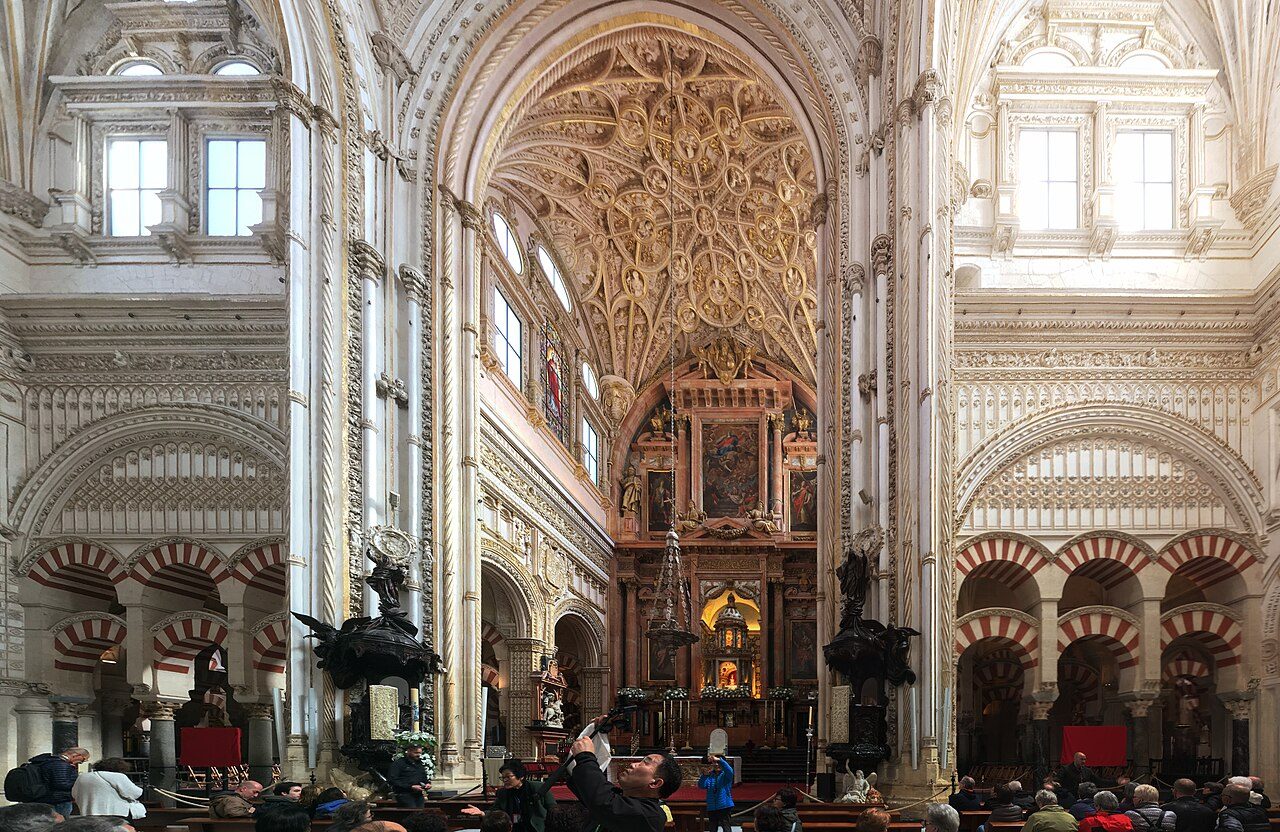
The cathedral nave in the centre of the Mosque of Córdoba was begun in 1523 under Bishop Alonso Manrique, designed by Hernán Ruiz I and completed in the early 17th century by his successors. It mixes Gothic, Renaissance and Baroque styles and holds the high altar and the 18th-century mahogany choir stalls by Pedro Duque Cornejo, surrounded on all sides by the Umayyad arches.
Last verified
Begun
1523
Promoter
Bishop Alonso Manrique
First architect
Hernán Ruiz I
Completed
Early 17th century
Styles
Gothic, Renaissance and Baroque
Choir stalls
Pedro Duque Cornejo, 18th century
A cathedral built inside a mosque
After 1236 the former mosque served as a cathedral with only small chapels added. In 1523 Bishop Alonso Manrique obtained permission to build a large transept and choir in the centre of the prayer hall. The city council opposed the project, but the works went ahead. A later tradition attributes to Emperor Charles V the regret that something that could be built anywhere had replaced something unique; the quote is famous, although its exact wording is not documented.
Three generations of architects
Hernán Ruiz I designed the first phase in late Gothic style. His son and grandson, Hernán Ruiz II and III, continued it in Renaissance style, and Juan de Ochoa finished the vaults and dome in the early 17th century. The result is a cross-shaped space that rises above the roofs of the mosque.
What to see
The crossing and dome
From the transept you see Renaissance vaults standing directly on top of Umayyad arches.
The high altar
The main altarpiece, in red marble, dates from the early 17th century.
The choir stalls
Carved in mahogany by Pedro Duque Cornejo in the mid-18th century, the choir stalls are one of the masterpieces of Spanish Baroque woodcarving, with scenes from the Old and New Testaments.
The pulpits
Two Baroque pulpits in mahogany and marble flank the crossing.
The cathedral is the final part of our guided tour.
What to look for
The cathedral in dates
| Date | Milestone |
|---|---|
| 1236 | The mosque is consecrated as a cathedral |
| 1523 | Works on the new transept and choir begin |
| 16th century | Hernán Ruiz I, II and III build the nave and transept |
| Early 17th century | Juan de Ochoa closes the vaults and dome |
| 18th century | Pedro Duque Cornejo carves the choir stalls |
Worth knowing before you go
The cathedral area is where mass is celebrated. During services the choir and high altar are closed to tourists and photography is not allowed.
FAQ
Frequently asked questions
Short answers to what visitors ask most about The Cathedral Nave Inside the Mosque of Córdoba.
When was the cathedral built inside the Mosque of Córdoba?
The large cathedral nave was begun in 1523 and completed in the early 17th century; before that, the mosque was used as a cathedral with smaller chapels.
Who designed the cathedral nave?
Hernán Ruiz I began it, his son and grandson continued it, and Juan de Ochoa completed it.
Did Charles V regret building the cathedral?
A famous tradition says so, but the exact words attributed to him are not documented.
Ready when you are
Twelve centuries. Ninety minutes.
See the Mosque of Córdoba with a licensed guide. Daily at 10:00, ten people at most, entry at face value.